

Last week, we were thrilled to come together at The Bank in the Digital Hub in Dublin to launch Let Young People Make Art: The Benefits of Art Making for Children with Long-term Physical Health Conditions, a new literature review exploring how art-making can support the health and wellbeing of children and young people living with long-term health conditions. The review was co-authored by Aoife Brady, Research Assistant, MSc Psychological Science; Helene Hugel, CEO of Helium; and Eunan McKinney, Public Health Advocacy Strategist.
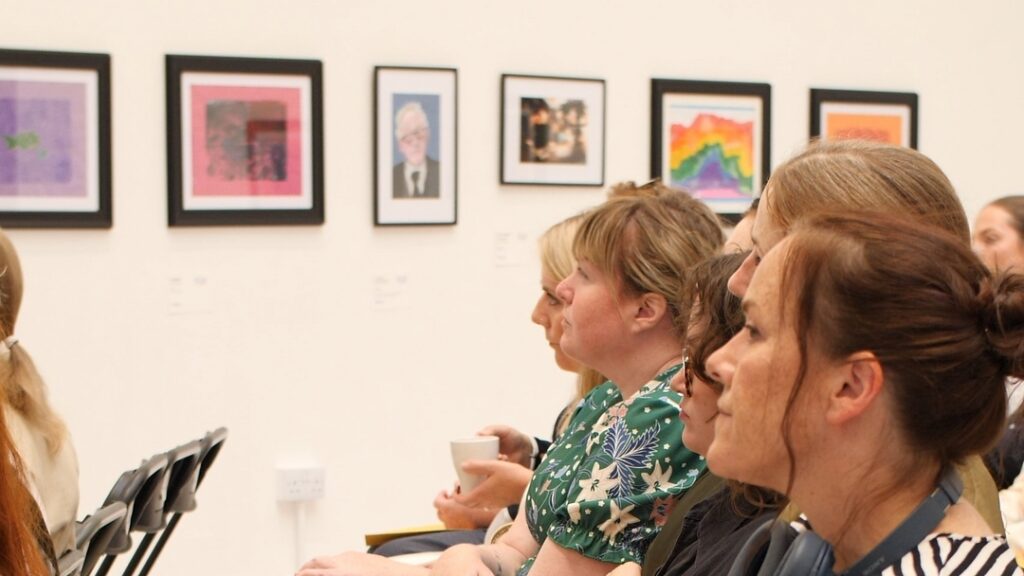
The launch event brought together young people, health professionals, policy makers, funders, artists and supporters to explore why access to creativity matters, and why it should be recognised as an important part of a child’s health and wellbeing.
Speaking at the launch event, Dr Veronica Kelly, paediatrician with CHI / CRC and Helium board member, highlighted that one in five children in Ireland lives with a long-term health condition. While timely, high-quality medical care is essential, children living with these conditions can miss out on everyday childhood experiences, from friendships and school to hobbies and opportunities to play.
As Dr Kelly explained,
“We can’t give their childhood back to them and we can’t replace the bits that are missing.”
The research reviewed more than 9,000 pieces of literature, bringing together evidence of the restorative benefits of art participation for psychological wellbeing, including emotional expression, identity formation, social connection, and reduction of distress.
For Helium, this evidence strengthens the case for recognising creative arts programmes as more than an optional extra. It supports our call for equitable access to creativity for children and young people living with long-term health conditions, including through health and care services.
But perhaps the most powerful evidence came from the young people themselves
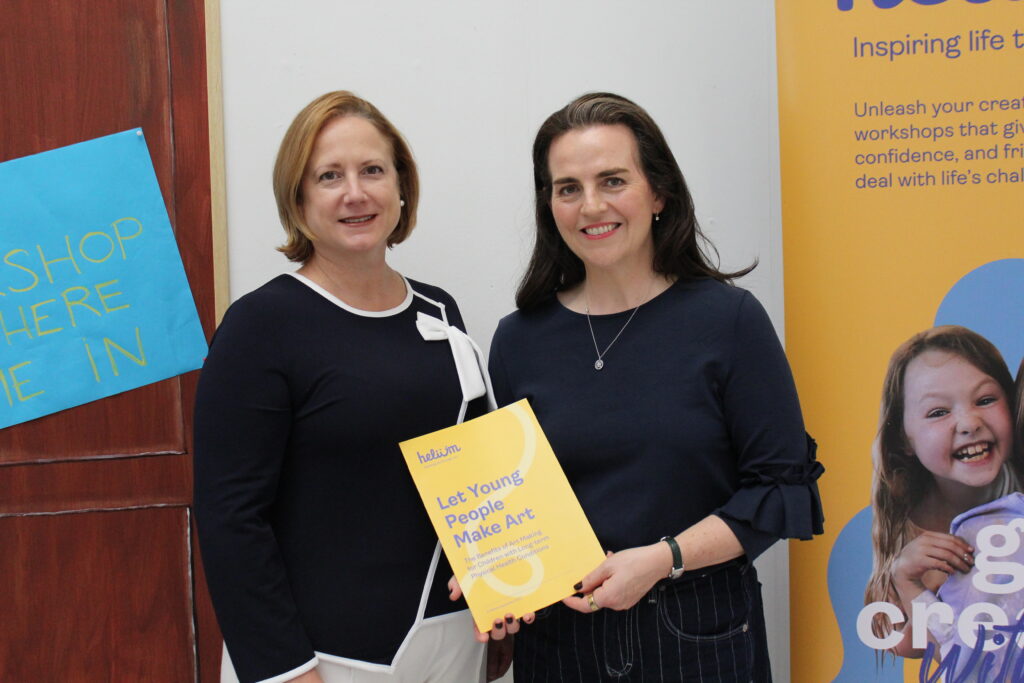
Helium Board members Angela Marie Billick, investment, product and financial services expert, and Dr Veronica Kelly, Paediatrician at Children’s Health Ireland (CHI) / Central Remedial Clinic (CRC).
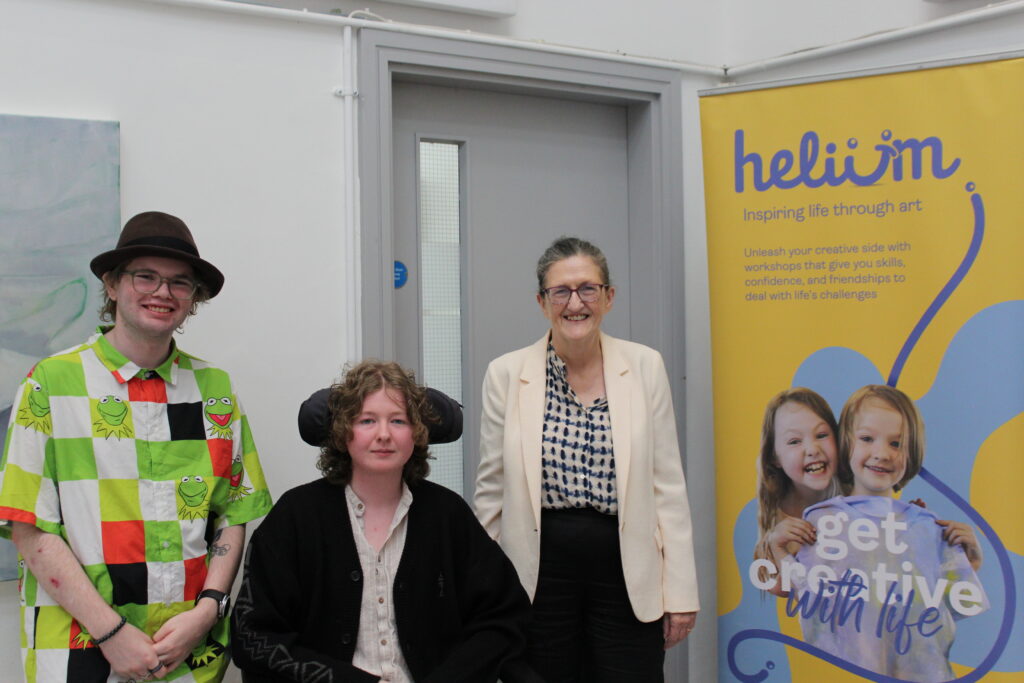
Owen Petticrew and Eric O’Connor, members of Helium’s Youth Advisory Group Alumni, with Bairbre Meaney, Department of Children, Disability and Equality.
Helium Youth Advisory Group Alumni member, Eric spoke about how serious illness had taken him away from art, which had always been a part of his identity. Through an online Helium workshop, he began to find his way back to creativity and discover new ways to express himself.
Owen shared how Helium helped him find his confidence, creativity and lasting friendships. As he put it:
“I found a tribe, I found myself and I found my spark.”
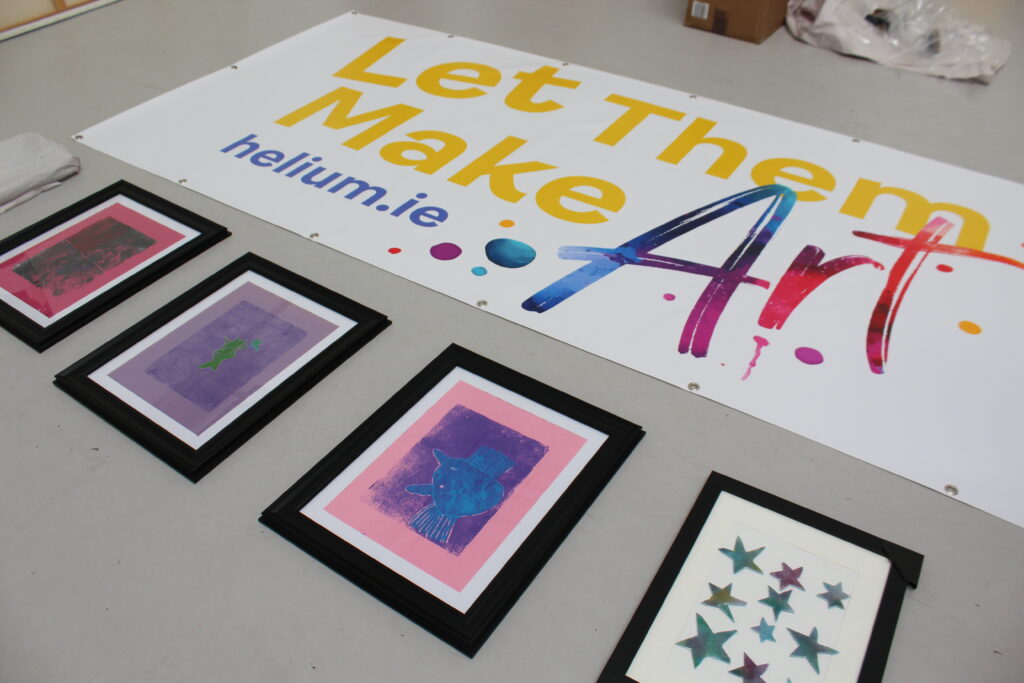
These experiences continued through the Let Them Make Art exhibition, where young people’s artwork and personal stories offered a glimpse into their worlds, exploring identity, illness, family, dreams and hope.
The afternoon concluded with a walk and talk through the exhibition, led by Helium artist Ana Colomer and members of our Alumni. It was an opportunity to hear more about the artwork directly from the young people and reflect on what it means to have space to create, connect and feel more like yourself.
Thank you to everyone who joined us, listened and helped make the afternoon so meaningful. We hope the research and the young people’s voices will help build greater recognition of the importance of creativity in children’s health and wellbeing.
Let Them Make Art, and its accompanying exhibition are supported by the Government of Ireland through the Department of Foreign Affairs and Trade, Ireland Shared Ireland Civic Society Fund. Co-Funded by the European Union.