Research
Let Young People Make Art
The Benefits of Art Making for Children with Long-term Physical Health Conditions
2026 literature review commissioned by Helium
About the Research
Let Young People Make Art explores the evidence for the role of visual arts in supporting the psychological wellbeing of children and young people living with long-term physical health conditions.
Building on the wider evidence that participation in the arts can support positive emotions, purpose and meaning, autonomy, life satisfaction and quality of life, this review looks specifically at the restorative benefits of artmaking for children living with lifelong physical conditions.
It also considers how creative arts programmes can be delivered effectively, and where further research is needed.
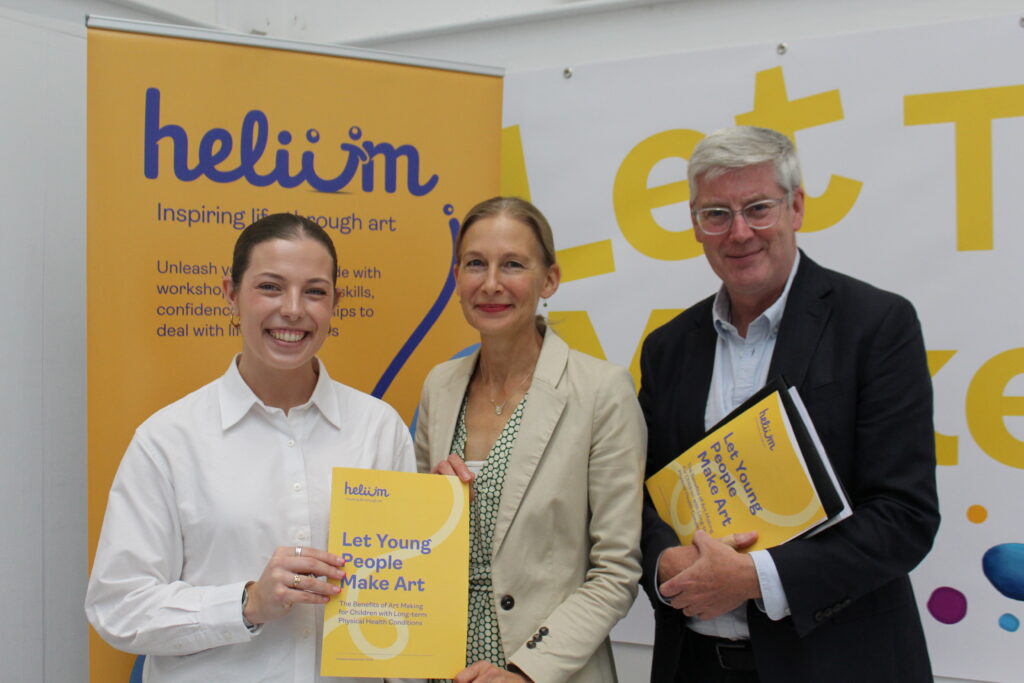
Lead co-authors: Aoife Brady, Research Assistant, MSc Psychological Science; Helene Hugel, CEO, Helium and Eunan McKinney, Public Health Advocacy Strategist.
Key Findings
The review highlights that:
Creative arts can support mental health and wellbeing, including self-esteem, confidence, social skills, empowerment and positive behavioural change.
Children living with long-term health conditions can experience significant psychosocial challenges, including anxiety, low mood, social exclusion, disrupted education, reduced self-esteem and difficulties developing an identity beyond their illness.
Visual arts can provide a way to express emotions and experiences that may be difficult to put into words, while also helping to reduce distress associated with illness and healthcare environments.
Artmaking can support identity and personal agency, giving children a non-clinical space to explore independence, self-expression and the parts of themselves that exist beyond their medical condition.
Creative arts programmes can reduce isolation and strengthen social connection, helping children to feel heard, understood and connected to others.
Why this matters
The evidence supports the value of creative arts as an important part of a holistic approach to the health and wellbeing of children and young people living with long-term physical health conditions.
However, the review also identifies a need for more large-scale and longitudinal research to understand which programme models are most effective and to strengthen the case for embedding creative arts within holistic healthcare services.
For Helium, this research provides an important evidence base for our work and for our advocacy for equitable access to creative opportunities for children and young people living with long-term health conditions.